2026-08-19 · Mark Ellison
How To Inspect Your Boat For Mold Before Dry Storage In South Florida
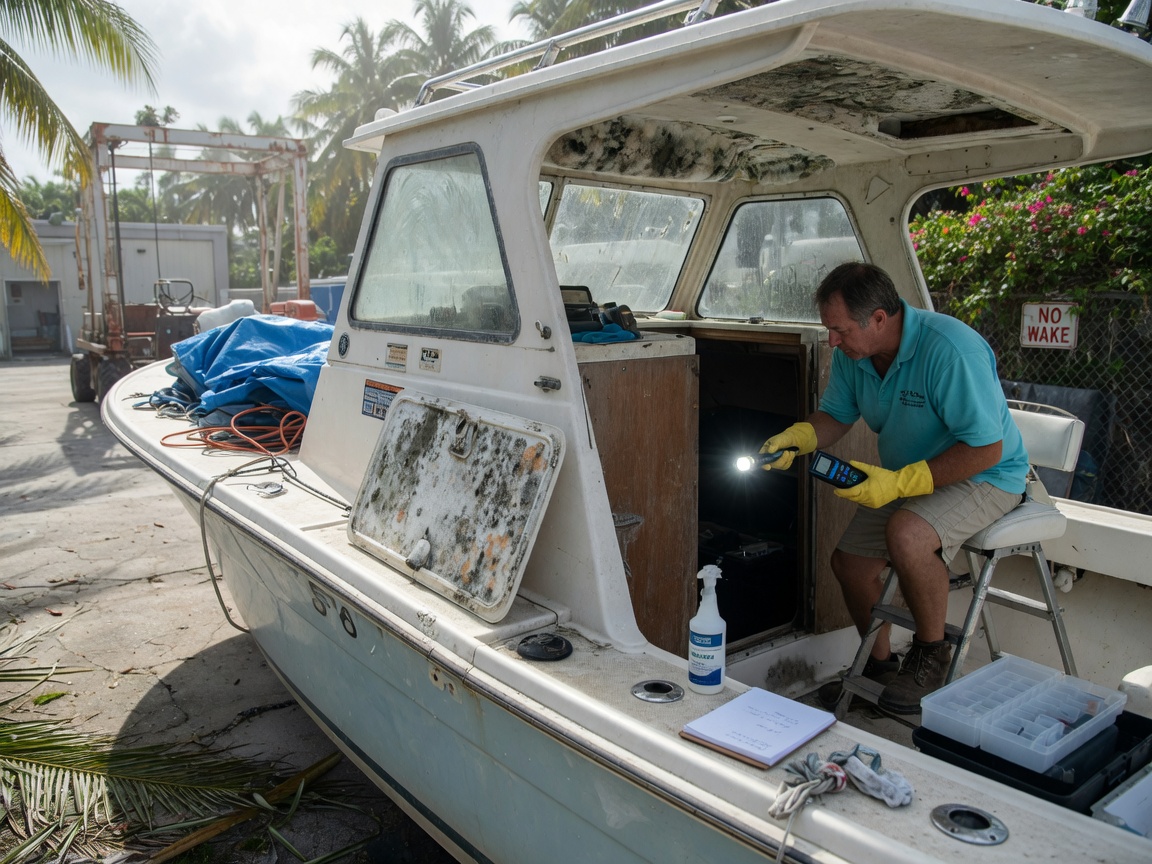
In Fort Lauderdale's tropical monsoon climate, inspect your boat for mold at least 48 hours before moving it into dry storage by checking all interior surfaces with a moisture meter and flashlight after a full wipe-down of the bilge and cabin. This catches early growth from summer rains before the dry winter period sets in across Broward County.
Checking the Cabin and Living Quarters
Walk through the cabin on boats stored near Las Olas Isles or Victoria Park and shine a light into every corner, under cushions, and behind bulkheads where condensation collects during wet summers. Use a moisture meter on wood trim and fabric to detect readings above 15 percent that signal hidden mold starting in the high humidity. Pay attention to areas around hatches that leak during monsoon rains common in Broward County. Open all drawers and lockers to look for black or green spots on surfaces that stay damp year-round. Note any musty odors that linger even after ventilation. Boats in neighborhoods like Rio Vista often sit in covered slips that trap moisture, making these checks essential before dry storage. Document findings with photos to track changes over the off-season. This process takes 45 to 90 minutes on a typical 40-foot vessel and reveals issues early.
Inspecting the Bilge and Engine Room
Drain the bilge completely and run a dehumidifier for 24 hours before inspection on vessels docked in Tarpon River or Coral Ridge. Shine a light into stringers and under engines where water pools after heavy summer storms in Broward County. Check for rust streaks or soft spots on fiberglass that indicate ongoing moisture from the wet season. Test seams around through-hulls with a moisture meter, as saltwater intrusion accelerates mold in the dry winter air. Boats near Fort Lauderdale Beach face salt spray that mixes with humidity and creates ideal conditions for growth in engine compartments. Remove floorboards to inspect stringer tops and look for discoloration on insulation. This step prevents mold from spreading during months in dry storage when temperatures drop slightly but humidity remains elevated.
Examining the Hull, Deck, and Storage Areas
Climb aboard and inspect deck hardware, anchor lockers, and chain plates on boats from Downtown Fort Lauderdale or Hollywood marinas. Look for standing water in scuppers that never fully drains during the transition to dry winters. Check canvas covers and bimini tops for mildew on the underside where trapped moisture sits for weeks. In Pompano Beach and Oakland Park areas, boats often experience afternoon thunderstorms that soak compartments before owners return. Use a borescope in tight cavities around fuel tanks to spot early growth. Measure humidity inside closed lockers with a digital meter aiming for under 50 percent before sealing for storage. These checks catch problems that worsen when the vessel sits idle for months.
Accounting for Local Climate and Storage Timing
South Florida's wet summers followed by drier winters mean mold risk peaks in late fall when boats enter dry storage after peak humidity. In Broward County neighborhoods like Coral Ridge, afternoon rains keep surfaces damp even as overall rainfall drops. Schedule inspections during the morning when temperatures are cooler to avoid false moisture readings from dew. Compare readings from summer and winter visits to see how conditions shift. Boats stored near Las Olas Boulevard often face wind-driven moisture that enters vents. Adjust your timeline to inspect two days before haul-out so any discovered damp spots can dry fully. This local pattern makes pre-storage checks more critical than in drier regions.
Knowing When Professional Help Is Needed
If moisture readings exceed 20 percent or you find visible growth larger than a quarter in the cabin or bilge, contact specialists before dry storage rather than risking spread. Services like Marine Mold Inspection & Testing provide detailed mapping that homeowners cannot replicate. For ongoing humidity control once stored, review Off-Season Humidity Management options suited to Fort Lauderdale conditions. After major storms, read Boat Mold Removal In Fort Lauderdale After Summer Storms to understand what follows missed inspections. Compare approaches in What Influences Boat Mold Removal Costs In Fort Lauderdale if remediation becomes necessary. Marine Mold Pros operates Monday through Friday 8am to 6pm and Saturday 9am to 2pm for these evaluations across Broward County.