Fort Lauderdale’s tropical monsoon climate brings heavy summer rains and persistent humidity that penetrates boat living quarters through hatches, ports and deck joints. Older vessels common in Rio Vista and Tarpon River marinas often have teak bulkheads and foam-core liners that trap moisture behind surfaces, allowing mold to colonize hidden cavities before odors reach the salon. Remediation crews must disassemble cabinetry and remove saturated insulation without damaging wiring runs or fuel lines typical on 40- to 60-foot yachts berthed along the Intracoastal.
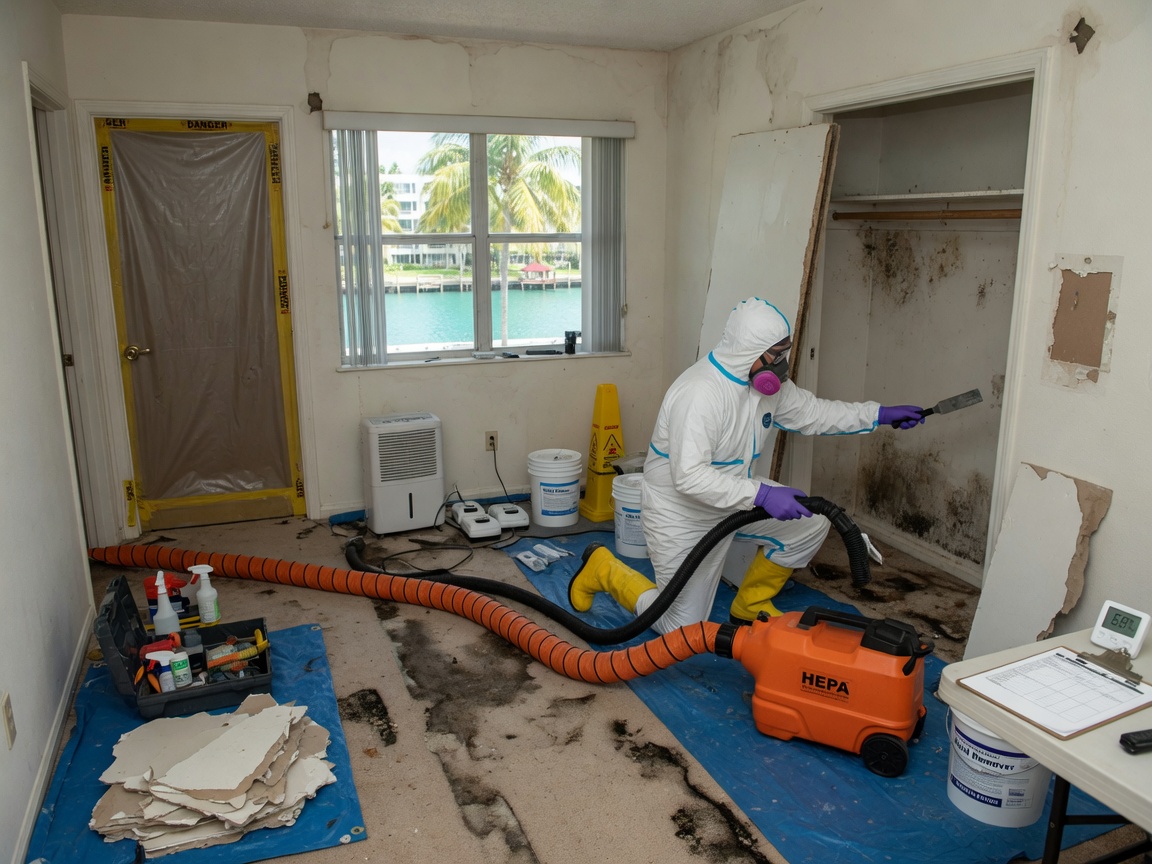
Marine-grade materials such as closed-cell foam, vinyl headliners and fiberglass stringers require different drying times than residential drywall. Technicians use moisture meters calibrated for gelcoat and wood cores, then apply HEPA-filtered negative air during removal to keep spores from drifting into adjacent heads or engine rooms. Broward County marinas enforce strict pump-out and waste rules, so all contaminated debris must be bagged and disposed at approved upland facilities rather than rinsed overboard.
Edge cases include vessels that sit idle for weeks during the dry winter season; condensation forms inside air-conditioned staterooms when exterior humidity spikes, especially on boats moored near Fort Lauderdale Beach where salt air accelerates corrosion of fasteners. Crews also address secondary water intrusion from leaking portlights common on 1990s-era models found in Las Olas Isles slips. Final clearance testing confirms spore counts return to outdoor baseline levels before owners return aboard.
Technician insight
In Fort Lauderdale the thing that catches most people out with living quarters remediation is how quickly mold hides behind the foam-backed vinyl headliners once summer rains raise interior humidity; boats that sit closed up for even a week in Rio Vista or Coral Ridge slips develop colonies that only show after you pull the panels.
Hidden mold behind bulkheads on a 48-foot yacht
A 48-foot motor yacht berthed in Las Olas Isles developed musty odors in the master stateroom after weeks of wet summer weather. Inspection revealed saturated foam insulation behind the teak bulkhead where a leaking portlight had allowed moisture to wick upward. Crews removed the affected panels, treated the stringers, and dried the space over four days before reinstalling new marine-grade insulation.
Living Quarters Remediation Services We Offer
✓Stateroom Mold Remediation
Removes mold from mattresses, bulkheads and storage lockers while protecting bedding and electronics typical in Fort Lauderdale liveaboard vessels.
✓Galley Decontamination
Treats mold in refrigerators, cabinetry and counter substrates without contaminating food-prep surfaces on yachts berthed in Downtown Fort Lauderdale.
✓Head and Shower Mold Treatment
Targets mildew in fiberglass showers, teak soles and ventilation ducts common in Broward County boats exposed to constant humidity.
✓Salon and Lounge Remediation
Addresses mold growth behind settees and under flooring in main living areas of vessels moored near Las Olas Boulevard.
✓V-berth and Crew Quarters Cleaning
Cleans forward cabins and crew bunks where poor airflow allows hidden mold on boats in Pompano Beach and Oakland Park marinas.
Living Quarters Remediation Cost in Fort Lauderdale, FL
| Service | Typical Range | What Affects It |
|---|---|---|
| Initial living-quarters inspection | $250–$450 | Varies by boat length and number of staterooms |
| Single stateroom remediation | $800–$1,800 | Includes drying and clearance; higher for older wood interiors |
| Full salon and galley package | $2,200–$4,500 | Price rises with hidden mold behind liners or multiple heads |
| Post-remediation clearance testing | $150–$300 | Required by many Broward marinas before owner re-boarding |
Ranges are typical for Fort Lauderdale, FL and confirmed with an exact written quote before any work starts.
How it works
- 1
On-site Assessment
Inspect living quarters, measure moisture in bulkheads and liners, and document affected zones while the vessel remains in its Fort Lauderdale slip.
- 2
Containment Setup
Isolate staterooms and galleys with plastic barriers and negative air machines to prevent spore migration into adjacent compartments.
- 3
Source Removal
Extract saturated materials, HEPA-vacuum surfaces, and treat remaining substrates with marine-safe antimicrobials.
- 4
Drying and Verification
Deploy dehumidifiers sized for the vessel’s volume until moisture readings stabilize, then confirm clearance before reassembly.
Pricing
Costs depend on vessel size, extent of hidden mold and access constraints; quotes provided during listed business hours.