Fort Lauderdale's tropical monsoon climate brings heavy summer rains and persistent humidity that drives moisture into boat interiors, especially in older fiberglass hulls common in Victoria Park and Tarpon River slips. Mold testing must account for condensation behind bulkheads, under teak soles, and inside air-conditioning ducts that run through living quarters on yachts berthed near Las Olas Boulevard. Technicians collect air and surface samples while noting tidal fluctuations and canal water levels that raise humidity inside vessels stored at docks in Coral Ridge and Downtown Fort Lauderdale.
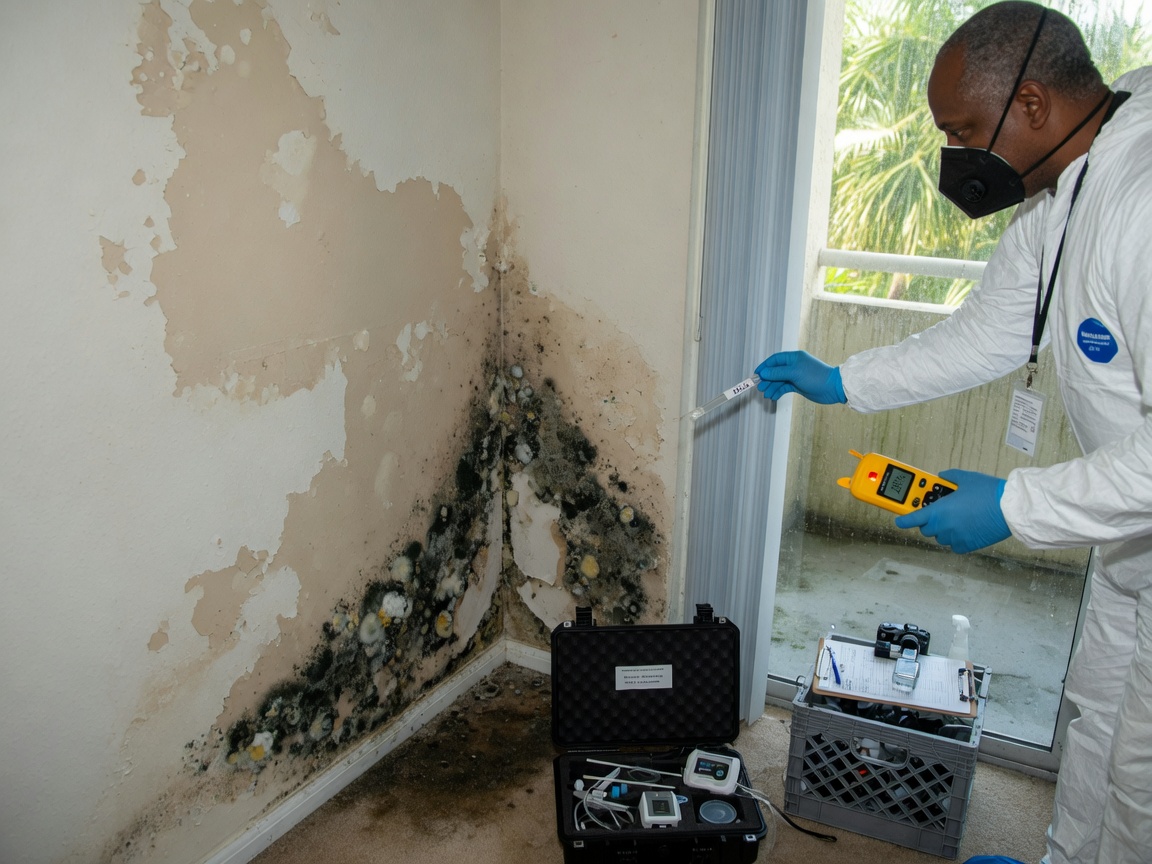
Testing protocols differ from residential work because boats lack standard building materials; gelcoat, marine plywood, and closed-cell foam trap moisture differently than drywall. Edge cases include hidden growth along stringers after minor leaks at deck hardware or in lazarettes that stay damp during the dry winter season. Reports include moisture meter readings and spore counts so owners in Pompano Beach or Hollywood can decide whether remediation is needed before the next wet season returns.
Regulatory notes for Broward County focus on proper disposal of contaminated materials removed from vessels; testing documentation helps marinas verify that growth has been identified before any work begins. Homeowners often overlook HVAC return vents on flybridges where salt-laden air mixes with cabin moisture, creating recurring colonies that simple visual checks miss.
Technician insight
In Fort Lauderdale the thing that catches most people out with mold testing is the way canal water and afternoon thunderstorms push humidity into boats stored in Las Olas Isles and Rio Vista; the moisture sits behind bulkheads for weeks after the rain stops, so surface checks alone never catch the real source.
Hidden Growth Behind Sole Plates
A 48-foot motor yacht kept near Las Olas Isles showed musty odors after summer rains. Testing located elevated spores and moisture along the stringers beneath the salon sole. Samples confirmed active growth in the marine plywood; the owner received a clear report that guided targeted removal without unnecessary cabin demolition.
Mold Testing Services We Offer
✓Cabin Air Sampling
Collects air samples from main salons and staterooms to identify elevated spore levels common after Fort Lauderdale's wet summers.
✓Bilge Moisture Mapping
Uses meters and borescopes to locate trapped moisture along stringers and below sole plates on vessels docked in Rio Vista and Las Olas Isles.
✓Surface Swab Testing
Takes direct swabs from gelcoat, wood trim, and upholstery to confirm active growth before any cleaning begins.
✓HVAC Duct Inspection
Examines marine air-conditioning ducts and returns for mold that spreads through vessels berthed near Fort Lauderdale Beach.
✓Post-Remediation Verification
Re-tests cabins and bilges after removal work to confirm spore counts have returned to normal outdoor levels.
Mold Testing Cost in Fort Lauderdale, FL
| Service | Typical Range | What Affects It |
|---|---|---|
| Basic Cabin Air Test | $275–$425 | Two air samples; increases with additional staterooms |
| Bilge and Hull Moisture Mapping | $350–$550 | Higher for larger yachts with multiple compartments |
| Full Vessel Panel | $650–$950 | Air, surface, and moisture readings across all areas |
| Post-Remediation Clearance | $225–$375 | Single follow-up visit after work is complete |
Ranges are typical for Fort Lauderdale, FL and confirmed with an exact written quote before any work starts.
How it works
- 1
Vessel Walkthrough
Technician boards the boat and inspects all accessible compartments while noting recent weather exposure and dock location.
- 2
Sample Collection
Air cassettes, swabs, and moisture readings are taken from targeted areas including bilges, cabins, and HVAC returns.
- 3
Laboratory Analysis
Samples are sent to an independent lab for spore identification and count comparison against outdoor controls.
- 4
Detailed Report Delivery
Findings are compiled with photos, moisture data, and recommendations for next steps specific to the vessel's construction.
Pricing
Cost depends on vessel length, number of samples required, and access difficulty in tight engine rooms or flybridge compartments.