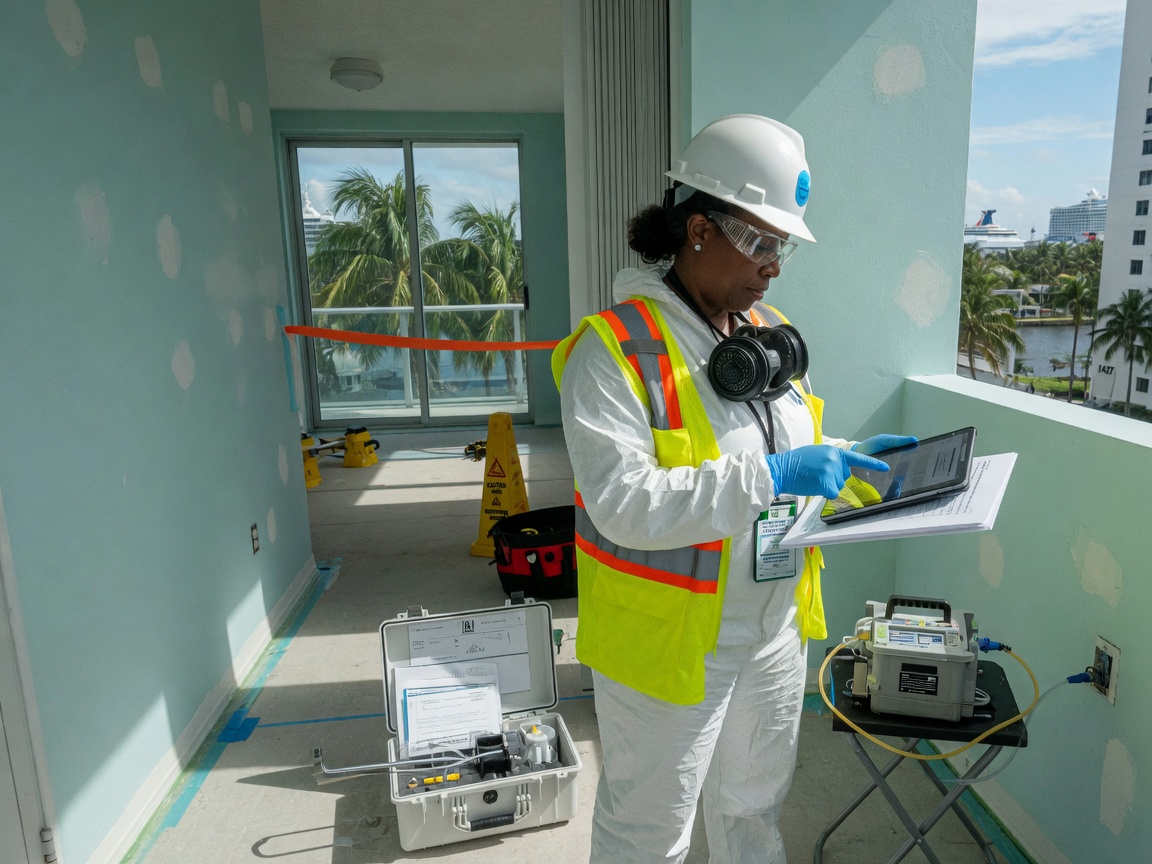
Post-remediation clearance certification requires surface sampling, air spore counts, and moisture readings on every accessible interior surface of the vessel. In Fort Lauderdale’s tropical monsoon climate, residual moisture in bilges or behind bulkheads can trigger rapid regrowth during wet summers, so technicians map humidity levels at multiple points along the hull and cabin before issuing clearance. Older fiberglass yachts common in Las Olas Isles and Rio Vista often have layered gelcoat repairs that trap spores; clearance protocols include targeted sampling of these repaired zones rather than random checks.
Clearance reports must document that airborne mold concentrations have returned to outdoor baseline levels measured at the marina. Vessels stored near the Intracoastal Waterway experience constant salt-laden humidity that slows drying after remediation, so the process includes extended dehumidification verification on hot, still days. Technicians also inspect engine compartments and head spaces where condensation forms overnight, noting any readings above 55 percent relative humidity that would prevent certification.
Edge cases arise with teak interiors and canvas enclosures on boats in Victoria Park and Coral Ridge; these porous materials require separate swab testing because spores embed deeply and resist standard HEPA vacuuming. Reports reference Broward County humidity records for the preceding 30 days so owners understand seasonal risk windows before the vessel returns to the water.
Technician insight
In Fort Lauderdale, the thing that catches most people out with Post-Remediation Clearance Certification is residual moisture trapped behind older teak bulkheads on boats kept in Las Olas Isles slips; the constant salt humidity keeps those cores above 60 percent even after the main cabin tests clear, so we always pull extra swabs there or owners end up calling us again in two weeks.
Rio Vista Yacht Re-Certification
Owner noticed musty smell returning two weeks after initial remediation on a 48-foot sportfisher kept at a Rio Vista dock. We found elevated moisture behind the port head vanity where a previous owner had glassed over a small leak. Additional drying and targeted sampling cleared the space; the vessel passed re-certification and left for Pompano Beach the next day.
Post-Remediation Clearance Certification Services We Offer
✓Air Spore Count Clearance
Outdoor baseline comparison sampling inside cabins and bilges to confirm mold levels have dropped to ambient conditions before the vessel leaves the yard.
✓Surface Swab Verification
Targeted swab testing of repaired bulkheads, stringers, and teak surfaces to verify no viable mold colonies remain after treatment.
✓Moisture Mapping Report
Multi-point moisture meter readings across hull liners, deck cores, and cabinetry to ensure readings stay below 15 percent before certification.
✓Post-Storm Re-Certification
Re-testing after heavy rain events common in Broward County summers to confirm no new moisture intrusion has restarted mold growth.
✓Engine Compartment Clearance
Dedicated sampling of engine rooms and generator spaces where salt air and heat create persistent condensation pockets on metal surfaces.
Post-Remediation Clearance Certification Cost in Fort Lauderdale, FL
| Service | Typical Range | What Affects It |
|---|---|---|
| 30–45 ft vessel clearance | $450–$750 | Standard cabin and bilge sampling; additional fee for engine room access. |
| 46–60 ft vessel clearance | $750–$1,100 | Extra samples needed for multiple heads and guest cabins common on larger yachts. |
| Re-test after storm | $300–$500 | Limited sampling focused on previously cleared zones. |
Ranges are typical for Fort Lauderdale, FL and confirmed with an exact written quote before any work starts.
How it works
- 1
Initial Site Assessment
Technician boards the vessel at the Fort Lauderdale marina and records current humidity, visible moisture, and any odor sources before starting clearance sampling.
- 2
Baseline Outdoor Sampling
Air samples collected dockside establish the local spore count for comparison against interior readings taken throughout the boat.
- 3
Interior Surface and Air Testing
Swabs and air cassettes collected from cabins, bilges, and heads; moisture mapped on all suspect surfaces including repaired fiberglass in older hulls.
- 4
Report and Certification
Lab results reviewed same day; clearance certificate issued only when all readings meet outdoor baseline and moisture thresholds.
Pricing
Clearance certification pricing varies with vessel length and number of compartments requiring sampling.