Fort Lauderdale sits in a tropical monsoon climate where wet summers deliver frequent rain and high humidity that drives mold into boat interiors. Vessels moored along the New River or in Las Olas Isles often sit in brackish water that wicks into bilge stringers and under deck cores. Older fiberglass hulls from the 1970s and 1980s common in Rio Vista and Tarpon River trap moisture behind liners where visual checks miss it. Inspection crews use moisture meters calibrated for marine laminates and borescopes routed through existing access points to avoid cutting gelcoat. When the source is uncertain, start with our Marine Mold Inspection & Testing service.
Dry winters in Broward County reduce visible surface growth but leave dormant spores in cabin headliners and wood trim. Vessels berthed near Fort Lauderdale Beach or the Intracoastal often show hidden colonies around porthole frames and chain lockers after heavy dew cycles. Technicians use moisture meters calibrated for marine composites and apply EPA-registered antimicrobials that withstand salt spray, followed by dehumidification tied to the boat's shore power. For deeper moisture investigation, Thermal Imaging & Moisture Mapping can help locate affected areas before materials are removed.
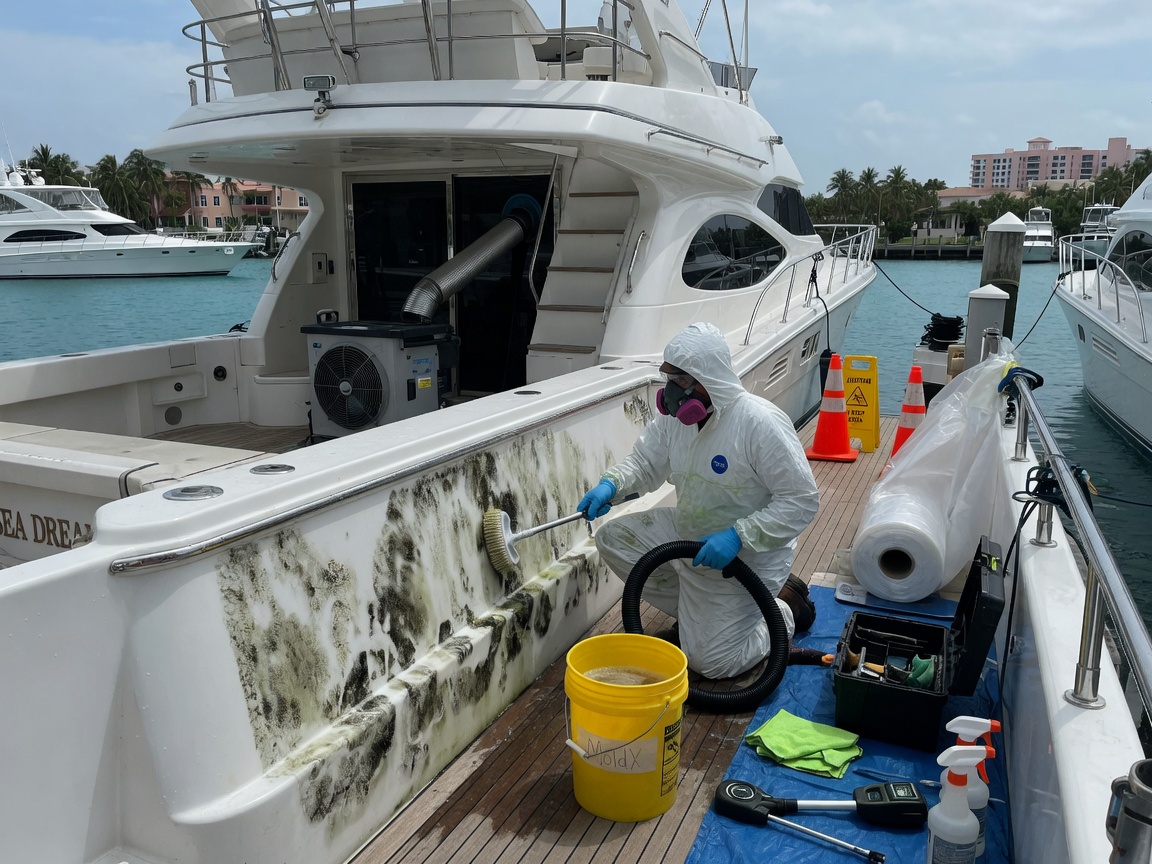
Containment on a yacht differs from house work because engine rooms and lazarettes have limited airflow. Negative air machines must exhaust through open hatches without drawing fumes from neighboring boats in Coral Ridge marinas. Post-remediation verification includes ATP swab testing on teak soles and vinyl headliners to confirm spore counts have dropped below marine industry thresholds before the vessel returns to service. Owners in Downtown can also review our Downtown Fort Lauderdale boat mold removal service area for local access and marina considerations.
Technician insight
In Fort Lauderdale the thing that catches most people out with Yacht Mold Remediation is how quickly spores travel from the bilge into the salon on boats over fifteen years old once summer rains raise humidity above 80 percent in Rio Vista and Tarpon River slips. Owners often treat only visible surfaces while the real reservoir stays behind the headliner because the vessel never fully dries between wet seasons.
Hidden Growth In A 48-Foot Sportfish
A 48-foot sportfish kept at a Rio Vista dock showed musty air in the salon after July rains. Inspection found saturated foam under the master stateroom sole and active growth in the forward bilge. Technicians removed the foam, treated the stringers, and ran dehumidifiers for five days before clearance testing allowed the owner to return the boat to charter service.
Yacht Mold Remediation Services We Offer
✓Bilge Mold Remediation
Removes mold colonies from stringers and limber holes where rainwater and condensation collect on yachts stored in Downtown Fort Lauderdale slips.
✓Cabin and Headliner Treatment
Targets growth behind vinyl and fabric headliners in staterooms common on vessels berthed in Victoria Park and Las Olas Isles.
✓HVAC Duct and Coil Cleaning
Cleans marine air conditioning systems that spread spores through closed cabins during Fort Lauderdale's humid summer months.
✓Post-Flood Yacht Drying
Extracts water and dries saturated foam and wood after storm surge events affecting boats near the Stranahan River.
✓Preventive Antimicrobial Coating
Applies marine-grade coatings to bilges and lockers to inhibit regrowth during dry winter periods in Broward County.
Yacht Mold Remediation Cost in Fort Lauderdale, FL
| Service | Typical Range | What Affects It |
|---|---|---|
| Initial Yacht Inspection | $250–$450 | Varies by length and number of cabins; includes moisture report |
| Bilge Mold Remediation | $800–$2,200 | Higher when stringers require insulation removal |
| Cabin And Headliner Remediation | $1,200–$3,500 | Depends on square footage and wood trim complexity |
| Full HVAC System Cleaning | $600–$1,400 | Includes coil and duct treatment on 40–60 ft vessels |
Ranges are typical for Fort Lauderdale, FL and confirmed with an exact written quote before any work starts.
How it works
- 1
Vessel Assessment
Technicians board the yacht at its slip in Las Olas Isles or Rio Vista to map moisture with infrared and pin meters while documenting affected compartments.
- 2
Containment Setup
Poly barriers and negative air are installed around the engine room and cabins to prevent spore migration to adjacent vessels in tight Fort Lauderdale marinas.
- 3
Source Removal
Moldy insulation, carpet, and trim are removed, followed by HEPA vacuuming and antimicrobial application on fiberglass and wood surfaces.
- 4
Drying And Verification
Dehumidifiers tied to shore power reduce moisture below 12 percent, then ATP testing confirms clearance before the yacht is released.
Pricing
Cost depends on vessel length, number of affected compartments, and whether insulation removal is required.